What is the Promobot Robo C?
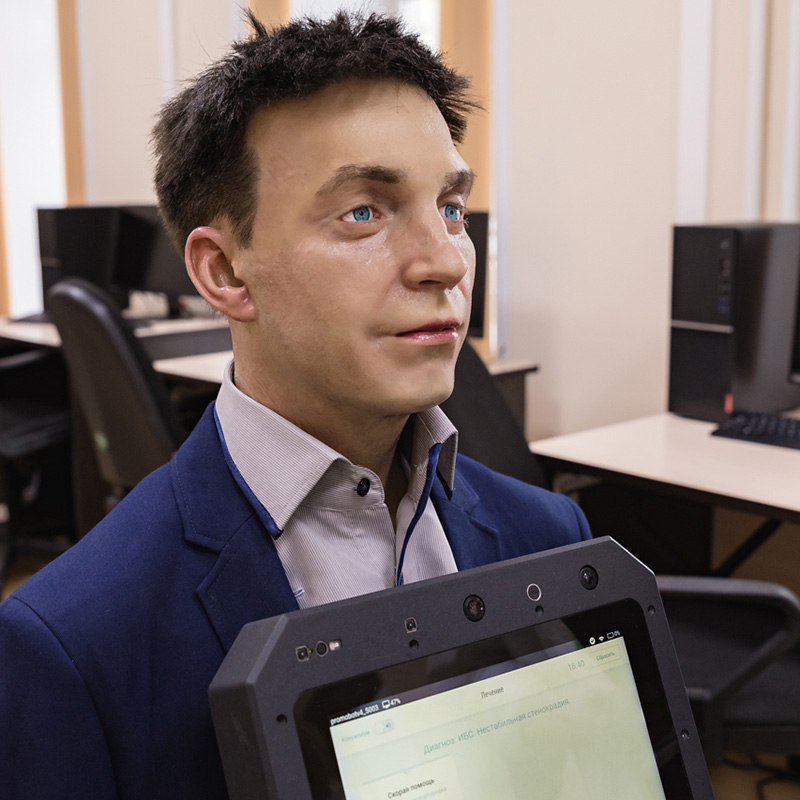
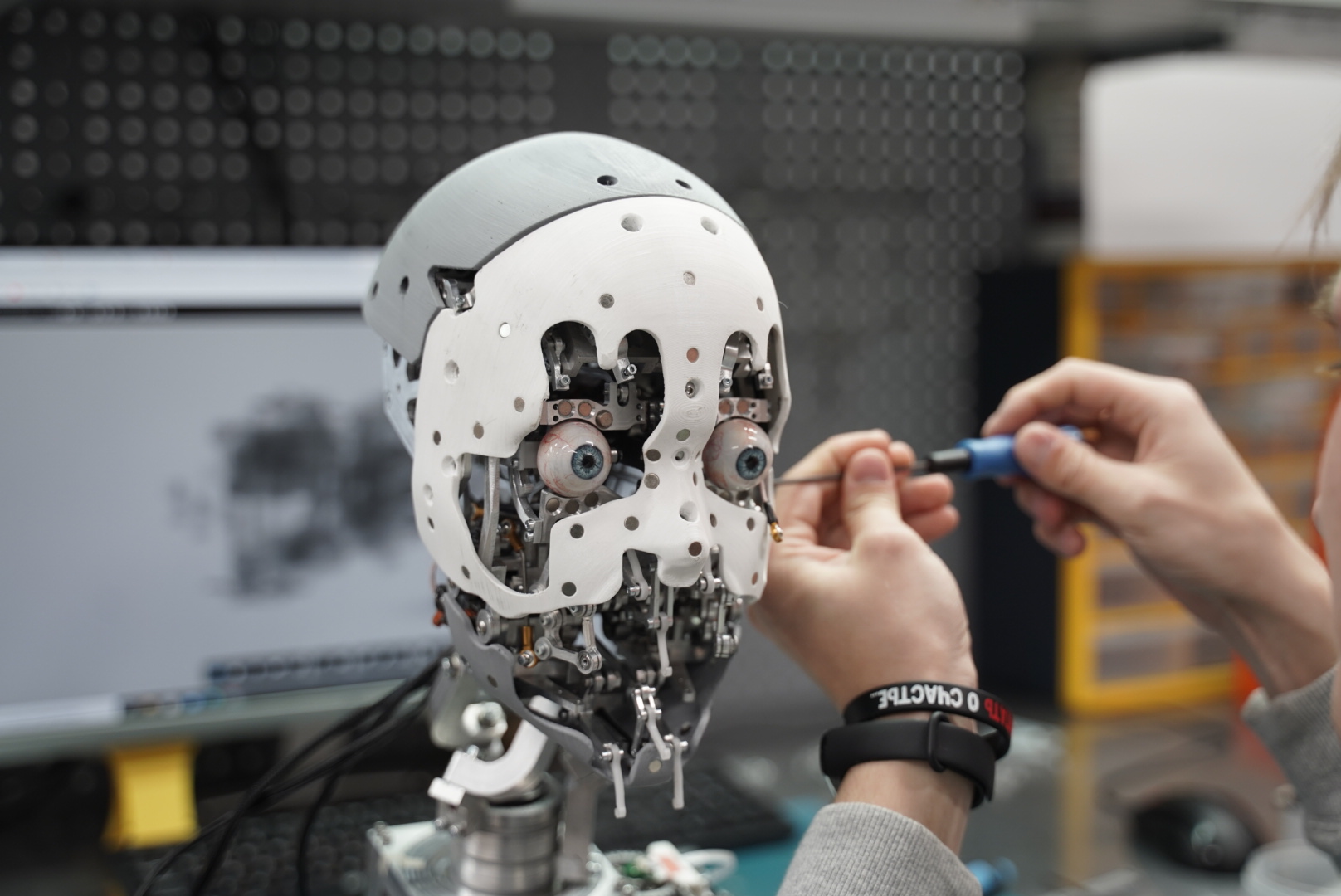
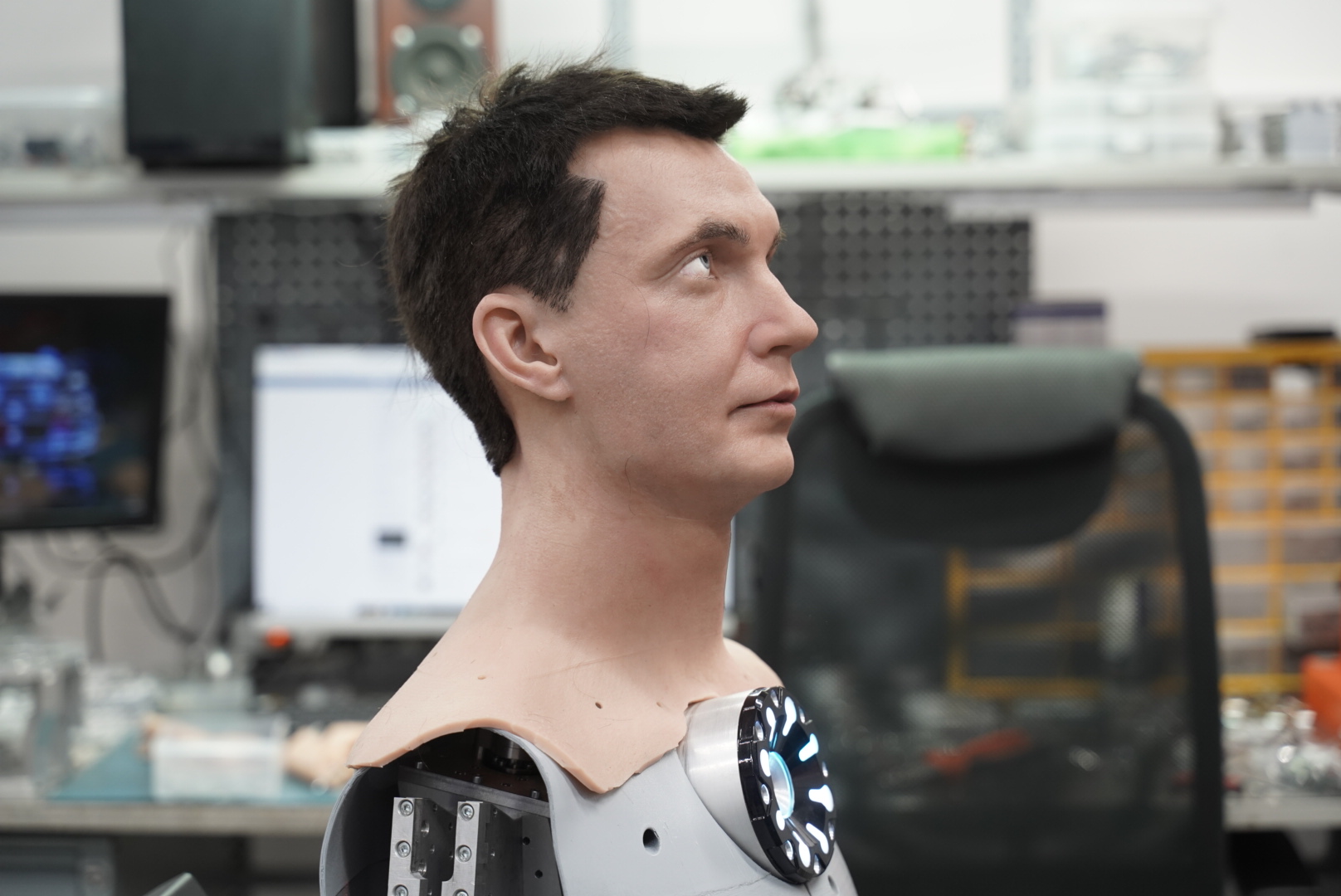
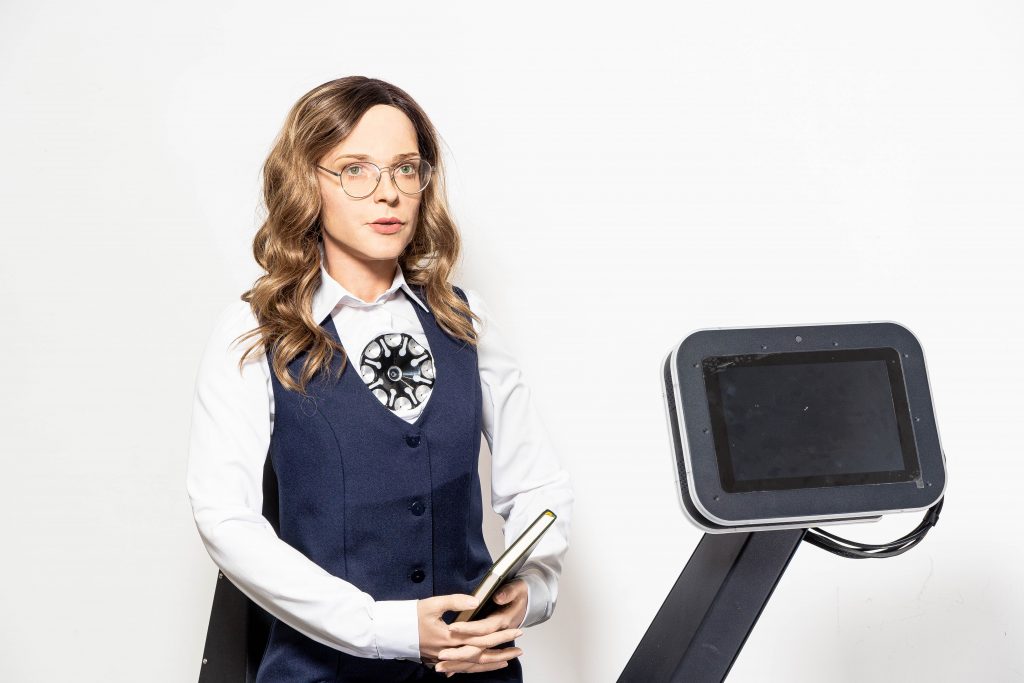
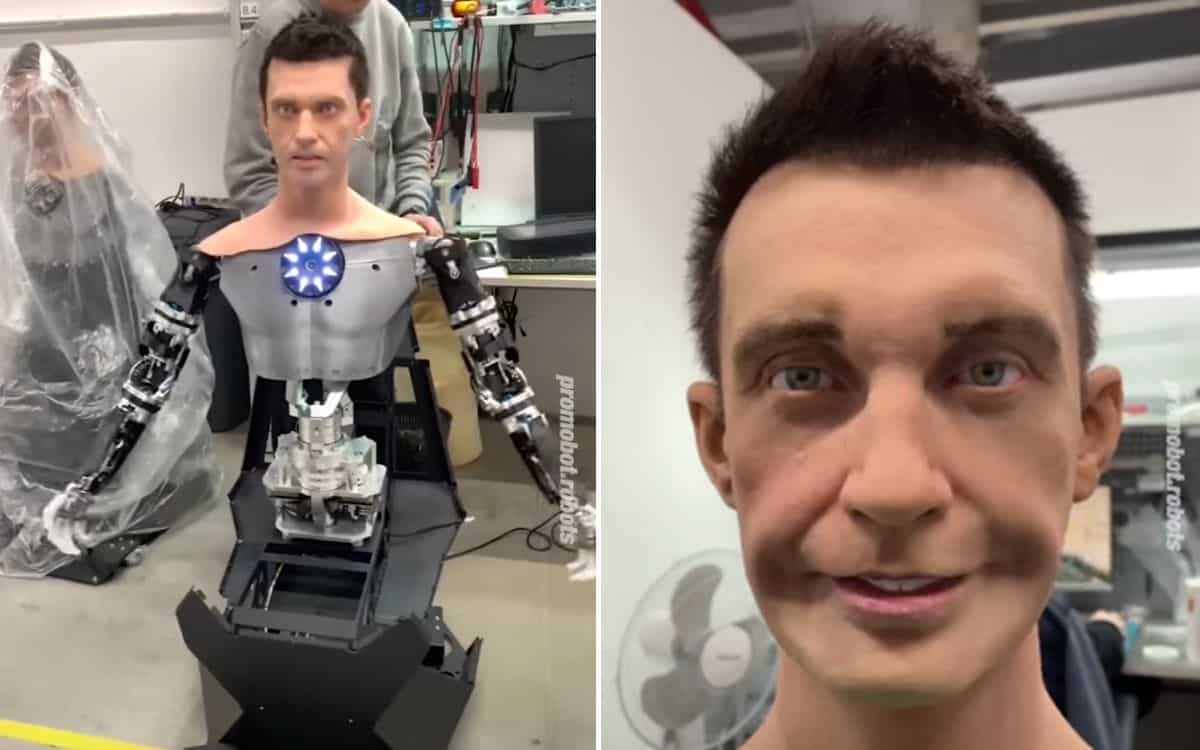
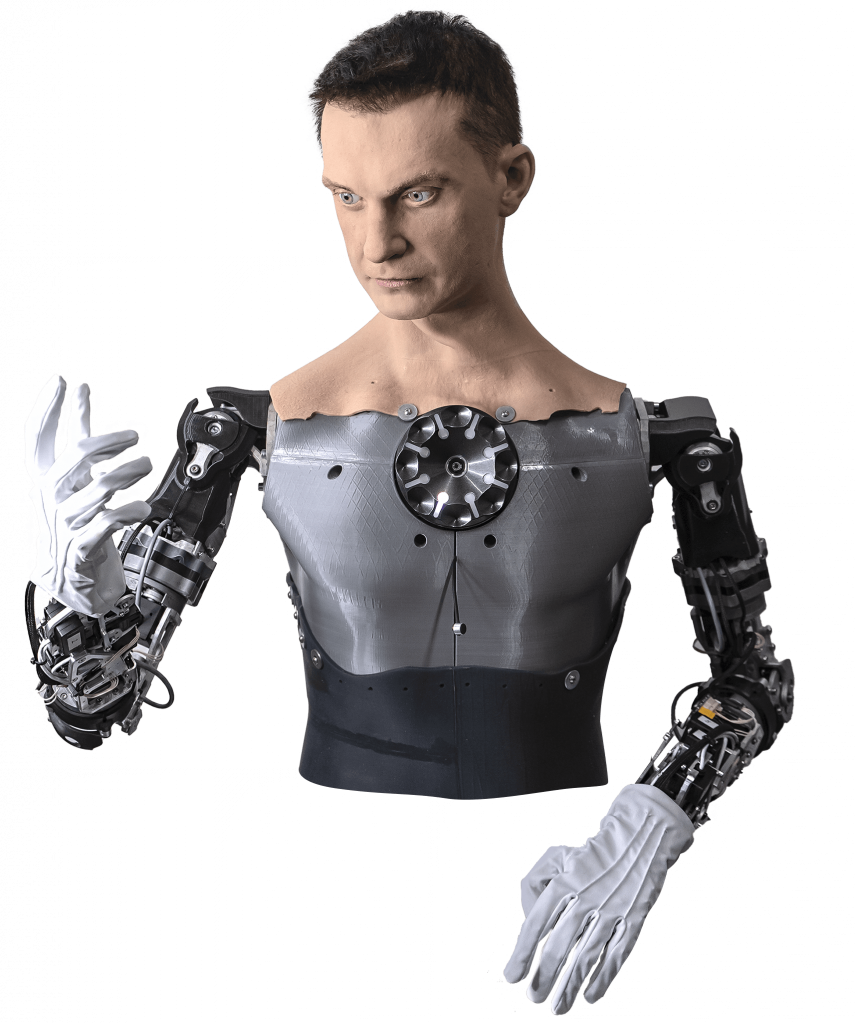
The Promobot Robo-C is an android bust developed by the Russian robotics company Promobot, headquartered in Perm, Russia. Unlike wheeled service robots, Robo-C is a stationary upper-body humanoid designed to replicate the appearance of any specific person using hyper-realistic silicone skin, custom-fitted onto a servo-driven facial rig. It features 12 degrees of freedom for lifelike expressions, integrated speech synthesis and conversational AI, and sensors for human interaction. Robo-C is primarily used as an interactive receptionist, information kiosk, or social companion in commercial and public spaces. The robot can be customized to resemble a company’s brand ambassador, a historical figure, or even a deceased relative, offering a unique blend of embodied artificial intelligence and realism. The system runs on Promobot’s proprietary operating system and supports multiple languages; facial animations are pre-programmed but can be partially real-time controlled via telepresence. Robo-C requires a permanent power connection and network link, limiting its placement to fixed locations.
Specifications
Here are the full technical specifications.
| Spec | Value |
|---|---|
| Height | Not specified |
| Weight | 32 kg |
| Degrees of freedom | 12 |
| Battery life | Not specified (mains-powered) |
| Max speed | Not applicable (stationary) |
| Payload | Not specified |
| Price (new) | Undisclosed (contact manufacturer) |
| Price (used range) | N/A (secondary market extremely limited) |
Price & Value
New MSRP: Undisclosed (contact manufacturer)
Used range: N/A (extremely limited secondary market)
Promobot does not publicly list the price of Robo-C, a common practice for bespoke robots where costs vary by customization level, licensing, and support contracts. Based on industry estimates and comparable androids like the Geminoid series, the base installation likely runs between $500,000 and $2.8 million, with a fully personalized silicone mask and software package pushing costs higher. Annual service contracts for maintenance, silicone replacement, and software updates can add $50,000 to $100,000 per year. For organizations that can justify the expense through branding impact or operational savings over human receptionists, Robo-C offers a unique value proposition, but the return on investment is difficult to quantify. On the secondary market, Robo-C units are extremely rare; when they do appear, prices are typically 40–60% below original cost due to worn silicone and outdated AI, though spare parts and recalibration by Promobot add to refurbishment costs. Overall, acquiring a Robo-C is a capital-intensive decision requiring a long-term commitment to maintenance and content development.
Who Is It For?
Best for: - Hotels, banks, or retail chains seeking a unique, hyper-realistic interactive receptionist to greet visitors and provide information - Museums and exhibitions wanting a lifelike replica of a historical figure or celebrity for educational or promotional purposes - Brand marketing campaigns where a custom android that resembles a spokesperson can create buzz and memorable customer experiences
Not for: - Budget-conscious deployments (the custom-built nature and service contracts make it extremely expensive) - Mobile service tasks (Robo-C is stationary; it has no locomotion or manipulation capabilities beyond facial movement)
Alternatives & Comparison
In the specialized market of hyper-realistic android busts, Robo-C competes with few alternatives, each offering a different balance of expressiveness and commercial readiness. While most comparable robots are research platforms or full-body humanoids, Robo-C targets practical business applications.
| Model | Price | Available | Key Difference |
|---|---|---|---|
| Sophia by Hanson Robotics | Undisclosed | no | Full-body humanoid with expressive face; not customizable to a specific person and not sold as a commercial product |
| Ameca by Engineered Arts | Undisclosed | yes | Universal facial expression platform for HRI research and entertainment; lacks personalized likeness |
| Geminoid by Hiroshi Ishiguro Laboratories | Undisclosed | no | Research-only android bust modeled after a specific person; used for telepresence and social studies |
Verdict: For enterprises seeking a personalized, brand-representative android that can interact with customers, Robo-C is the only turnkey commercial product available. Sophia and Ameca are better suited for media events and research where full-body interaction is needed, but they cannot be customized to a specific person’s face. Geminoid remains a laboratory tool. Therefore, if your goal is to put a familiar, friendly face on your reception desk or trade show booth, Robo-C is the best investment despite its undisclosed price and high maintenance requirements.
Use Cases & Capabilities
Interactive Receptionist
Robo-C’s primary application is as a next-generation receptionist in high-end hotels, corporate lobbies, and banks. Stationed at a desk, the lifelike android greets visitors, answers FAQs, and directs guests using conversational AI and a built-in touchscreen. Its customizable face can be modeled after the company’s CEO or a friendly persona, creating a memorable brand experience. The robot’s facial animations and lip-synced speech make interactions feel personal, unlike a static digital display. Because it’s stationary, it avoids navigation issues common with mobile robots. However, its reliance on pre-scripted dialogue limits complex queries, and it requires a stable internet connection for cloud-based AI. Organizations must also regularly update the robot’s knowledge base and facial expressions to keep interactions fresh, and installation includes mounting the bust on a custom-built reception desk.
Brand Ambassador & Marketing
Companies use Robo-C as a mobile marketing installation at trade shows, product launches, and flagship stores. The android, dressed and styled to match the brand, can deliver sales pitches, tell product stories, and take photos with attendees. Its hyper-realistic appearance draws crowds and generates media coverage, far exceeding the impact of a standard digital kiosk. Promobot offers a library of pre-built facial expressions and movements tailored to the brand’s identity. However, the high cost and the need for constant supervision limit its use to short-term campaigns. The robot’s silicone skin must be protected from harsh lighting and humidity, requiring climate-controlled display environments. Logistical challenges include secure transport and on-site technician support, which add to the total campaign budget.
Companion & Eldercare
Although not originally designed as a care robot, Robo-C has been tested in eldercare facilities where its human-like face can provide comfort and companionship. The robot can remind residents to take medication, engage in simple conversations, and display empathetic expressions. Its customizability allows it to resemble a familiar person, reducing feelings of isolation. However, without mobility or physical interaction capabilities, Robo-C cannot assist with daily tasks, and its uncanny appearance may unsettle some users. Research on its effectiveness in reducing loneliness is still limited, and the device is not a substitute for human care. Deployment in such settings also requires compliance with health data regulations and careful integration with existing care protocols.
History & Background
Promobot was founded in 2015 in Perm, Russia, by a team of engineers and entrepreneurs aiming to commercialize service robotics. The company’s first product was the Promobot V4, a wheeled autonomous robot for customer service in malls and airports. Following the success of its wheeled platforms, Promobot turned to humanoid interaction, unveiling the Robo-C in April 2019. It was the world’s first commercially available android bust capable of replicating any human face, using a patented silicone skin technology driven by 12 electric servos. The robot could imitate over 600 micro-expressions, synthesized speech, and held basic conversations. An upgraded version, Robo-C-2, launched in 2021 with enhanced tactile sensors and smoother facial motion. Unlike research androids, Robo-C was designed as a plug-and-play product for businesses. As of 2026, Promobot continues to offer both Robo-C generations as custom orders, with installations in Russian banks, European museums, and Middle Eastern retail chains. The company has also expanded into telepresence applications, allowing remote operators to animate the bust.
Buying Used — What to Check
Verify silicone skin condition Silicone degrades over time; check for tears or discoloration that require costly replacement.
Confirm software licenses Robo-C uses proprietary software; ensure license transfer is permitted or that the unit can be updated.
Test servo calibration After shipping, the 12 facial servos may need recalibration; budget for a factory service visit.