

OpenAI debuted the Codex Micro keyboard on July 15, a $230 device that sold out in roughly 12 hours. Some of the lucky buyers are now listing the limited-edition keyboard on eBay for as much as $1,850, signaling intense demand for AI-branded hardware even before the company's main consumer gadget arrives.
- The Immediate Sellout and eBay Frenzy
- What the Codex Micro Actually Does
- From Merch Misstep to Hardware Testing Ground
- A Glimpse of OpenAI's Hardware Ambitions
- What This Means for the Industry
- Frequently Asked Questions
- Conclusion
The Immediate Sellout and eBay Frenzy
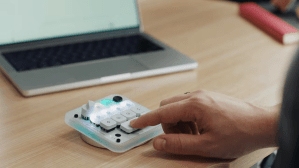
The Codex Micro, a compact 12-key keyboard with a joystick and an LED ring, was produced in limited quantities by OpenAI in partnership with boutique manufacturer Work Louder. According to Fortune, the device sold out the same day it went on sale. OpenAI has said it will not restock the unit.
Within hours, listings appeared on eBay. The highest confirmed sale reached $1,250 on July 16, the day after launch. Prices settled to around $800–$1,000 over the following week and have since fallen to about $450 as of late July—still nearly double the original $230 price. Most sellers are based in the U.S., but listings have also appeared from France, the Netherlands, and Ireland. One active listing as of this writing is priced at $1,850, though no buyer has met that ask.
What the Codex Micro Actually Does
The keyboard is designed exclusively for developers using OpenAI's Codex coding assistant, a competitor to Anthropic's Claude Code. The LED ring changes color to signal status: red for errors, orange for warnings, green for success, and blue when the AI is actively processing a task. A physical dial adjusts the AI's effort level for a given task, while the joystick triggers common commands like debugging or refactoring code.
Despite the premium branding, some programmers were unimpressed. One Redditor noted that programmable keyboards with knobs are available for under $20, and open-source software can replicate many of the Micro's functions on any standard keyboard. Still, collectors appear to see the device as a keepsake from the early AI era—an artifact bearing OpenAI's logo in a form factor that may never be produced again.
From Merch Misstep to Hardware Testing Ground
The Codex Micro originated not as a major hardware push but as a merchandise experiment. OpenAI's internal store, Supply Co., initially served employees but briefly opened to the public in December 2025 for the company's tenth anniversary. The items—minimalist streetwear-inspired hoodies and tote bags—were widely mocked on social media, with critics calling the designs "tasteslop" and "nerd merch."
That public ridicule prompted OpenAI's merchandising team to "step up their merch game," according to Work Louder co-founder Mike Di Genova. The company reached out to Work Louder in late December, and within a few months the two teams finalized the Codex Micro concept. OpenAI placed a large order; Di Genova expected it would take at least a month to sell through. It took half a day.
The Micro is not connected to OpenAI's buzzy upcoming consumer device, which is being developed with former Apple designer Jony Ive. But it serves as a real-world test of two concepts central to that effort: physical hardware as an interface for OpenAI's software, and voice interaction. The keyboard includes a microphone button that lets users speak instructions to the AI.
A Glimpse of OpenAI's Hardware Ambitions
OpenAI co-founder and president Greg Brockman has called voice the "interface of the future," arguing that spoken interaction lets the computer adapt to the user rather than the other way around. He predicted that today's reliance on "clicking and typing" will eventually be viewed as a temporary phase.
The Codex Micro's existence suggests OpenAI sees dedicated hardware as a way to differentiate itself in an increasingly crowded AI market. Work Louder's Di Genova paraphrased Steve Jobs: "If you want to make great software, make hardware, because basically there's no moat anymore." As AI models become increasingly commoditized, hardware—even a niche keyboard—offers a tangible brand touchpoint and a data source for improving voice and gesture interfaces.
What This Means for the Industry
For investors, the speed of the sellout underscores consumer appetite for branded AI peripherals. It also suggests that OpenAI's broader hardware strategy, including the upcoming device with Jony Ive, may command significant demand if priced and marketed correctly. The secondary market prices—peaking at over 5x retail—indicate a willingness to pay a premium for limited-edition AI hardware.
For competitors like Anthropic and Google DeepMind, the Codex Micro represents a new type of competitive front: hardware ecosystems that lock developers into specific tools. Anthropic's Claude Code is a direct rival to OpenAI's Codex, but it has no dedicated physical device, which could become a differentiator if developers value the tactile workflow.
For the broader tech industry, the episode highlights an emerging dynamic: AI companies are moving beyond software subscriptions to create physical goods that deepen user engagement and brand loyalty. OpenAI's mishandled merch launch—turning mockery into a sellout in six months—shows that even small hardware experiments can yield significant attention and revenue.
Conclusion
OpenAI's first hardware step turned out to be a $230 keyboard that sold out in half a day and immediately became a collectible on secondary markets. While the Codex Micro is a limited-run merchandise item, its success offers early signals about consumer appetite for AI-branded peripherals and provides the company with real-world feedback on hardware design and voice interaction ahead of its flagship device.