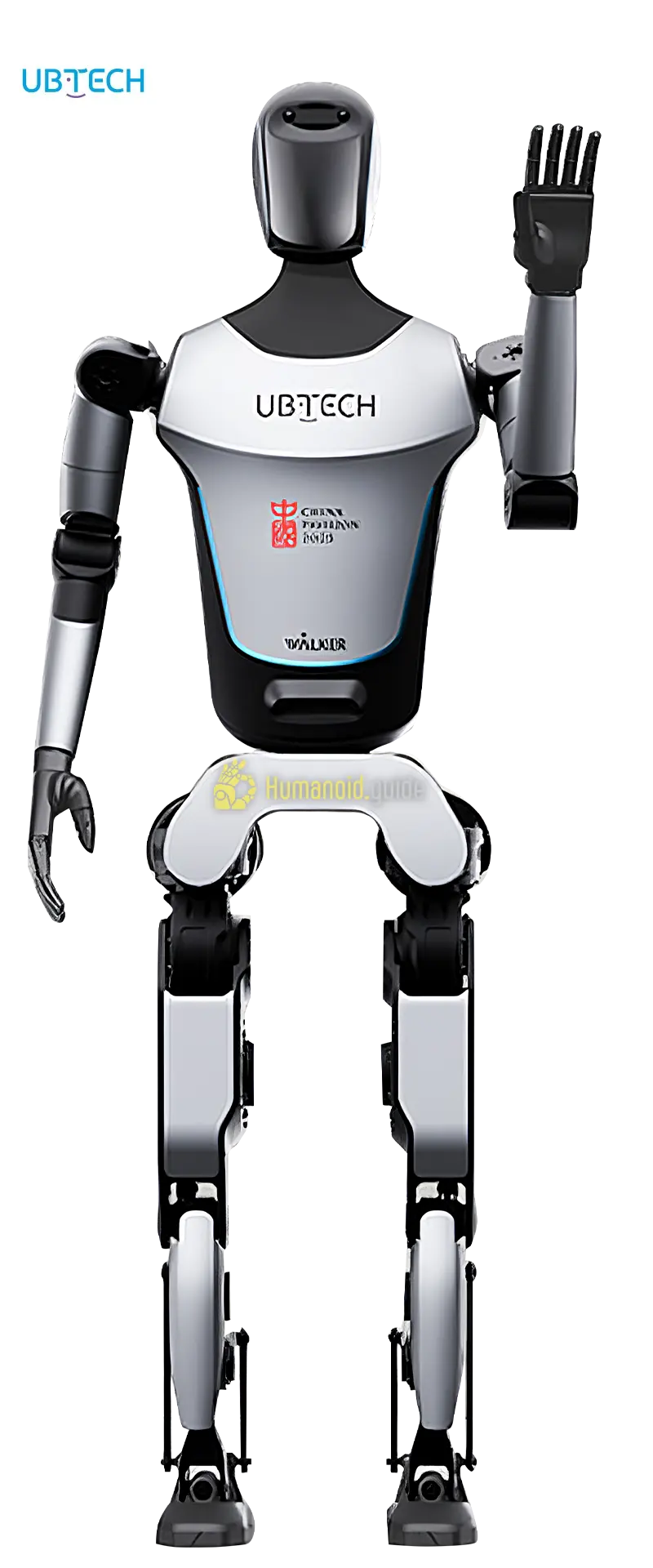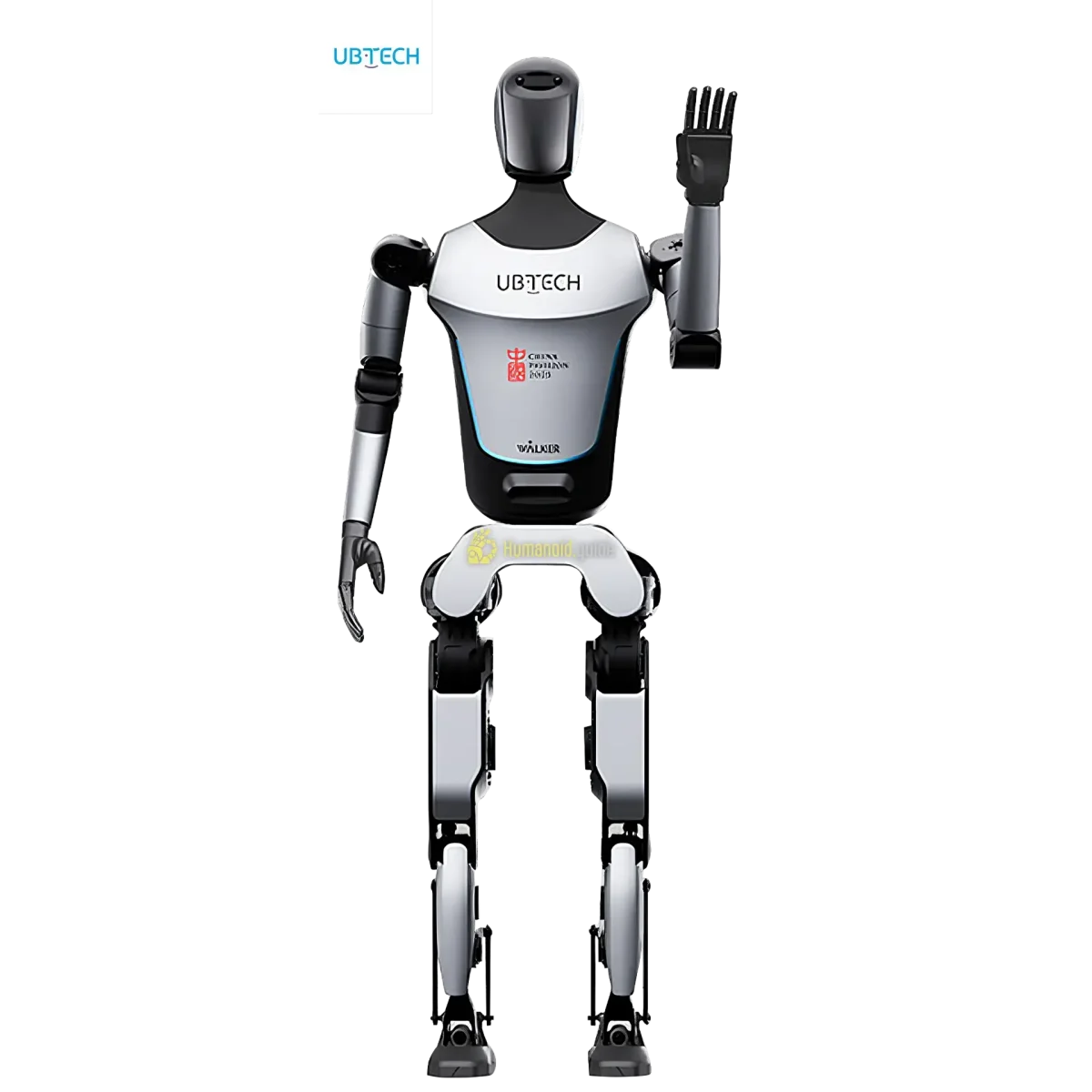
What is the Ubtech Walker C?
The UBTECH Walker C is a compact bipedal humanoid robot developed by UBTECH Robotics, a Shenzhen-based company founded in 2012. Designed specifically for tight spaces—narrow corridors, server rooms, and home environments—it stands just 163 cm tall and weighs 43 kg. With 20 degrees of freedom distributed across its legs, arms, and torso, it can walk up to 6 km/h, manipulate objects up to 6 kg per arm, and operate for about 2 hours on a charge. Its sensor suite includes dual RGB‑D cameras, two structured‑light 3D cameras, and a high‑precision IMU, enabling navigation and human‑robot interaction. An on‑board “Embodied Interactive Large Model” integrates natural language, vision, and motion control. The Walker C is the consumer‑oriented sibling to the larger, industrial‑focused Walker S series, targeting home assistance, education, and research but remains in prototype stage with no announced commercial release date.
Specifications
Here are the full technical specifications.
| Spec | Value |
|---|---|
| Height | 163 cm |
| Weight | 43 kg |
| Degrees of freedom | 20 |
| Battery life | 2 hours |
| Max speed | 6 km/h |
| Payload | 6 kg (arm manipulation) |
| Price (new) | Undisclosed (contact manufacturer) |
| Price (used range) | N/A — pre‑commercial |
Price & Value
New MSRP: Undisclosed (contact manufacturer)
Used range: N/A — pre‑commercial prototype
UBTECH has not disclosed pricing for the Walker C. As a compact humanoid aimed at consumer, education, and research markets, it is expected to be priced far lower than industrial humanoids like Atlas or Digit, possibly in the range of simpler service robots like Pepper (~$18,000). However, until official pricing appears, all cost speculation is unwise. For research institutions and early adopters, the value proposition depends heavily on software ecosystem, sensor quality, and manufacturer support. Total cost of ownership will include maintenance, spare parts, and potential training, which are unknown. When commercial units ship, depreciation for a niche product may be steep initially, but the Walker C’s small size and low weight could make it attractive for labs with limited space.
Who Is It For?
Best for: - University robotics labs needing a compact humanoid for locomotion and HRI research (20 DOF, 6 kg payload, LLM integration) - Makers and educators exploring humanoid robotics on a potential consumer price point (sensors and connectivity built in)
Not for: - Heavy industrial tasks (no IP rating, low payload) - Large‑scale commercial deployment (still prototype, no production units available)
Alternatives & Comparison
The Walker C occupies a unique niche among humanoid and service robots: compact, potentially affordable, and designed for close human interaction. Key alternatives include wheeled service robots like SoftBank Pepper, advanced research platforms like Boston Dynamics Atlas, and general‑purpose bipeds like Tesla Optimus and Agility Digit.
| Model | Price | Available | Key Difference |
|---|---|---|---|
| SoftBank Pepper | $18,000 | yes | Wheeled base, emotional interaction focus; not bipedal. |
| Boston Dynamics Atlas | Undisclosed (research‑only) | no | Advanced dynamic locomotion; extremely high cost, research‑only. |
| Agility Digit | Undisclosed | preorder | Bipedal logistics robot; lacks arms for manipulation. |
| Tesla Optimus | Undisclosed (under $20k target) | preorder | General‑purpose humanoid, expected under $20k; full‑body manipulation capability. |
Verdict: For researchers who need a true bipedal humanoid with arms and hands at a moderate price, the Walker C could be compelling once released. However, until pricing and production timeline solidify, the proven Pepper platform offers a safer, immediately available option for HRI research. If heavy payload or outdoor navigation is required, Digit or Atlas are better suited but much costlier. For now, the Walker C remains an intriguing prototype worth monitoring.
Use Cases & Capabilities
Home Assistance
The Walker C’s compact size (163 cm, 43 kg) allows it to navigate narrow hallways and doorways typical of residential homes. With 6 kg arm payload and 10 fingers, it can fetch small objects, open light doors, and assist with simple household tasks. Voice and vision capabilities powered by UBTECH’s LLM enable natural interaction for reminders, companionship, or monitoring elderly residents. Battery life of 2 hours is sufficient for intermittent tasks, but daily use would require regular recharging. Still a prototype, it represents a step toward affordable home humanoids.
Education and Research
Universities and research institutes can explore bipedal locomotion, whole‑body manipulation, and human‑robot interaction with a hardware platform offering 20 DOF and a rich sensor suite (RGB‑D, structured‑light cameras, IMU). The inclusion of Bluetooth and Wi‑Fi simplifies connectivity and data collection. Early SDK support and a custom robotics OS are expected, though specifics remain unconfirmed. Its relatively low weight minimizes safety risks and lab space requirements, making it attractive for student projects. However, as a prototype, reliability and long‑term support are uncertain.
Retail and Entertainment
Standing 163 cm, the Walker C can serve as an interactive greeter or entertainer in malls, exhibitions, or hotel lobbies, where its bipedal walking draws attention. With natural language processing and expressive body motions (20 DOF), it can engage guests, answer questions, and provide directions. Its 6 kg payload allows carrying small promotional items or a tablet for information display. A 2‑hour runtime covers a typical shift with charging breaks. The lack of a public price and production timeline, however, makes commercial deployment speculative for now.
History & Background
UBTECH Robotics was founded in 2012 in Shenzhen, China, and quickly became known for its Alpha Series educational robots and the Cruzr service robot. The Walker humanoid family began with the large‑scale Walker X (41 DOF, 163 cm, 63 kg) introduced around 2021 for research and industry. In 2024 the company revealed two new directions: the industrial Walker S (41 DOF, 170 cm, 76 kg) deployed in car factories like BYD, and the smaller, more agile Walker C aimed at consumer and educational markets. The Walker C shrinks the platform to 163 cm and 43 kg while retaining 20 DOF, integrating the latest UBTECH “Embodied Interactive Large Model” for perception and control. It also spawned a variant, the Walker C1 (26 DOF, 165 cm, 50 kg, 3‑hour battery). As of 2026, the Walker C remains in prototype phase with no public sales date.
Buying Used — What to Check
Verify production status and official specs from UBTECH Prototype specs may differ from the final product.
Inspect joints and battery condition if purchasing a pre‑production unit Prototypes may have limited durability.
Check for software support and SDK availability Essential for research and integration.