
A resurgent Iran-Israel conflict, a tech selloff fueled by AI bubble fears, and the impending record-breaking SpaceX initial public offering are converging to test market resilience. Futures on the Dow, S&P 500, and Nasdaq all fell early Monday as investors braced for a week of heightened volatility.
- What's Driving the Market Turmoil?
- Geopolitical Risks Re-ignite
- Tech Sector Selloff Deepens
- The SpaceX IPO Factor
- What This Means for the Industry
- Frequently Asked Questions
- Conclusion
What's Driving the Market Turmoil?
Investors are confronting a rare alignment of three distinct headwinds: an escalation in Middle East hostilities, a sharp pullback in AI-related stocks following disappointing guidance from a key chipmaker, and a record-busting IPO from SpaceX that could absorb billions in investor capital. The mix is prompting traders to reassess risk across sectors.
Futures tied to the Dow fell 86 points, or 0.17%, after the opening bell. S&P 500 futures dropped 0.19%, and Nasdaq 100 futures lost 0.16%. U.S. oil futures jumped 2.6% to $92.88 a barrel, while Brent crude climbed 2.8% to $95.67. Gold slid 0.5% to $4,342 per ounce, and the yield on the 10-year Treasury held steady at 4.532%.
Geopolitical Risks Re-ignite
Over the weekend, Iran launched missiles at Israel for the first time since a ceasefire was reached in early April, shattering the relative calm. The attack followed continued Israeli bombing in Lebanon, which had been carried out in defiance of Washington's requests to stand down. Talks to extend the ceasefire had already stalled.
President Donald Trump scrambled to prevent a full-scale war by distancing the U.S. from the Israeli actions and urging Prime Minister Benjamin Netanyahu not to strike back at Iran. Nevertheless, tensions in the Persian Gulf remain elevated: the U.S. and Iran have increasingly exchanged fire while both sides seek to establish their own shipping lanes in the Strait of Hormuz.
Wall Street had largely assumed all-out war would be avoided, especially after reports suggested the Trump administration would not escalate unless more American troops were killed. That assumption is now being tested.
Tech Sector Selloff Deepens
Adding to the anxiety, the tech sector experienced a broad selloff late last week. The catalyst came from chip designer Broadcom, which delivered disappointing AI-related guidance in its quarterly earnings report on Wednesday. That sparked a selloff on Thursday that intensified on Friday after the Labor Department reported the economy added 172,000 net new jobs last month — nearly double Wall Street forecasts.
Prior months were revised sharply higher, signaling a labor market more resilient than expected in the face of higher oil prices tied to the Iran conflict. With employment strong, the Federal Reserve is now expected to focus more on fighting inflation, which has remained above the central bank's 2% target for years. Investors have all but given up on further rate cuts, and some are now pricing in the possibility of rate hikes.
The coming week brings fresh data: consumer inflation numbers on Wednesday and producer inflation on Thursday. Either could fuel additional rate hike fears and deepen the tech selloff.
The SpaceX IPO Factor
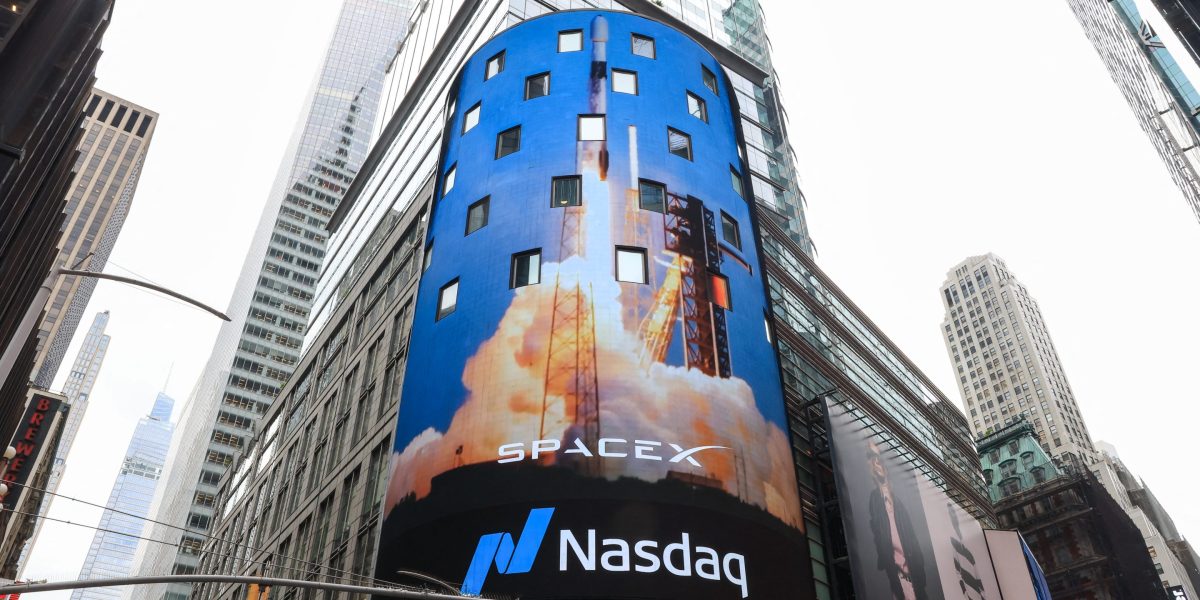
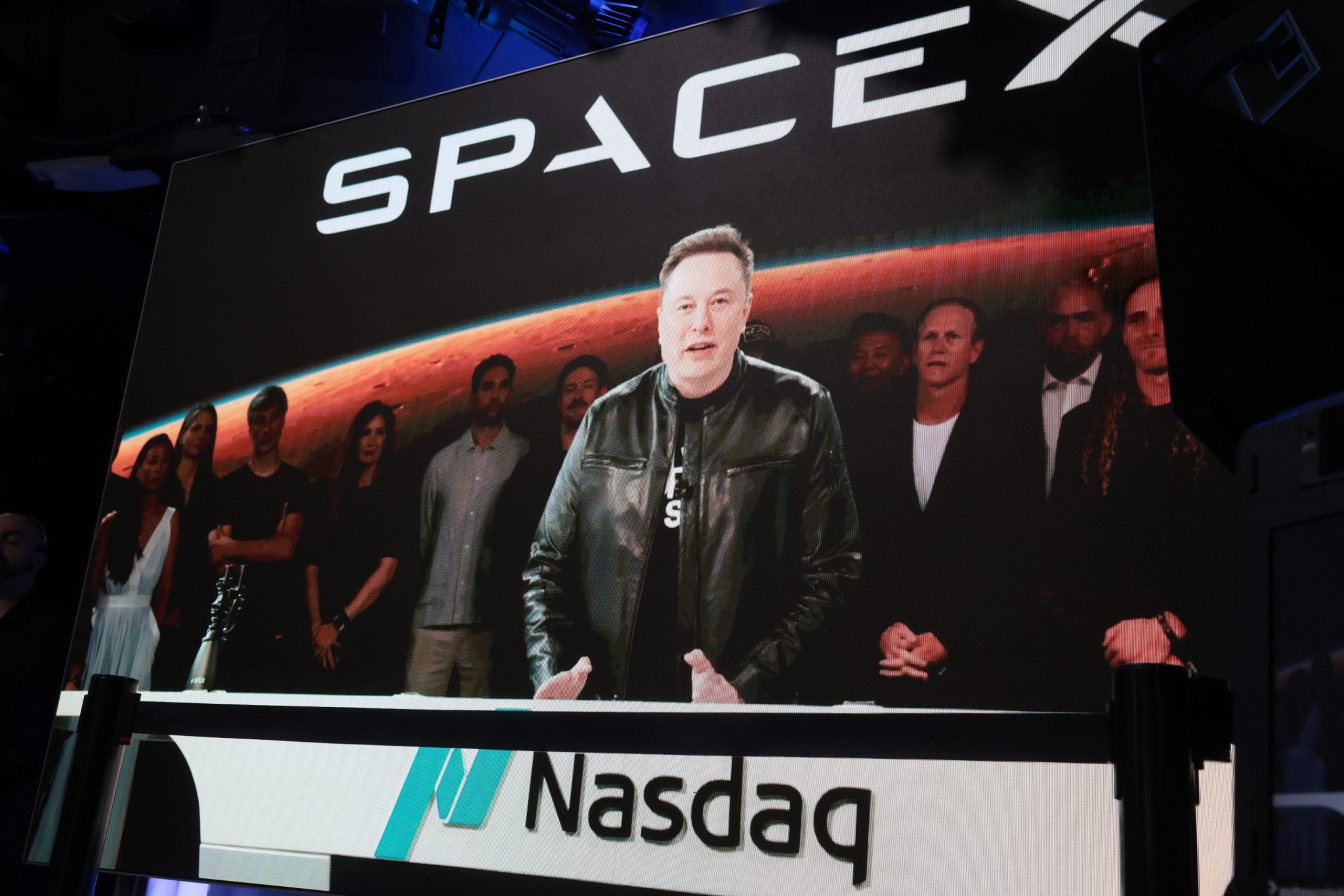
On Thursday, SpaceX is set to price its IPO, with shares beginning to trade on Friday. The company plans to raise at least $75 billion by selling over 555 million shares at $135 a piece, valuing the company at more than $1.75 trillion. If underwriters exercise options for additional allotments, proceeds could swell to $85.7 billion.
This is the largest market capitalization ever seen in a U.S. IPO, and it presents a unique systemic risk. According to an analysis from BNP Paribas, the sheer size of the offering could trigger significant market dislocations. Greg Boutle, head of U.S. equity derivative strategy at BNP Paribas, explained in a note that multiple buying forces — passive index funds, retail investors, levered ETFs, and options flows — could all chase shares simultaneously, creating a liquidity squeeze.
"We think many of the standalone SpaceX flows might be digestible. The problem is that many of these flows are potentially same-way and additive," Boutle wrote. "With the SpaceX free float reported to be close to $75bn on IPO, it's easy to see how $30bn of passive buying, a retail investor chase, and levered ETF and option flows collectively could quickly become challenging for the stock's liquidity. If all are chasing to buy (or sell) at the same time, the risk of price dislocation becomes much greater."
The potential for dislocation extends beyond SpaceX itself. Investors seeking cash to participate in the IPO may sell existing holdings, putting downward pressure on a broad range of stocks. The IPO's timing — amidst geopolitical strife and a tech sector correction — amplifies the risk.
According to a report from Fortune, this convergence of risks has few historical precedents.
What This Means for the Industry
For the broader market, the current moment represents a stress test of the rally that has carried stocks to recent highs. The combination of geopolitical uncertainty, macro-economic tightening, and a sector-specific pullback in AI names creates a fragile environment.
For investors, the key questions are: - How deep will the AI sector correction go? Broadcom's guidance suggests the earnings expectations tied to the AI buildout may have overshot reality, at least for some suppliers. - Can the Fed navigate between inflation and growth without tipping the economy into a downturn? The strong jobs data reduces the urgency for cuts but also raises the risk that the central bank hikes rates into a slowing economy. - Will the SpaceX IPO act as a gravity well for capital, sucking liquidity out of other tech and growth stocks? The record size of the deal means the answer could be yes, at least in the near term.
For competitors in the space and defense sectors, the Iran escalation could be a tailwind — higher defense spending and elevated oil prices tend to benefit players like Lockheed Martin and major oil producers. But broader market turbulence could offset those gains.
For the tech industry broadly, the AI selloff is a reminder that the capex cycle powering data center expansion is not immune to macro shocks. If the Fed is forced to hike, the cost of capital rises, potentially slowing investment in new AI infrastructure.
Frequently Asked Questions
Why are markets falling today? Markets are reacting to a triple threat: renewed Iran-Israel missile attacks, a tech selloff triggered by weak AI guidance from Broadcom, and anticipation of the record-sized SpaceX IPO that could drain liquidity from other stocks.
How does the Iran attack affect the stock market? Iran's missile strikes on Israel rekindle fears of a wider Middle East conflict, which could disrupt oil supplies through the Strait of Hormuz and push energy prices higher, fueling inflation. That complicates the Fed's rate path and increases investor uncertainty.
Is the AI boom over? Not likely, but the recent selloff suggests that some investors believe expectations for AI-related revenue and profit growth had become overextended. Broadcom's disappointing guidance served as a reality check for the sector.
What is the biggest risk from the SpaceX IPO? The sheer size of the offering — at least $75 billion — could create a liquidity event. Passive funds, retail investors, and leveraged ETFs all trying to buy SpaceX shares at once may cause price dislocations that ripple through the broader market as investors sell other holdings to raise cash.
Will the Fed raise interest rates? The strong jobs report makes a rate hike more plausible. Inflation has remained above the Fed's target, and with the labor market resilient, the central bank may prioritize price stability over economic stimulus. The upcoming inflation reports will be critical.
How should investors position themselves? Diversification and caution are warranted. Geopolitical and macro risks argue for reducing exposure to highly valued tech names, while energy and defense sectors may offer some protection. The SpaceX IPO could present an opportunity, but its impact on market liquidity should not be underestimated.
Conclusion
This week marks a critical juncture for markets, with geopolitical events, macroeconomic data, and a landmark IPO all converging at once. The outcome will depend on whether the Iran situation de-escalates, whether inflation data supports the Fed's current stance, and whether the SpaceX offering can be absorbed without severe dislocations. Investors would do well to prepare for a bumpy ride.







Participe da discussão
Which of the three risks do you think is most dangerous for markets right now?