What is the K2 Bumblebee Kepler?
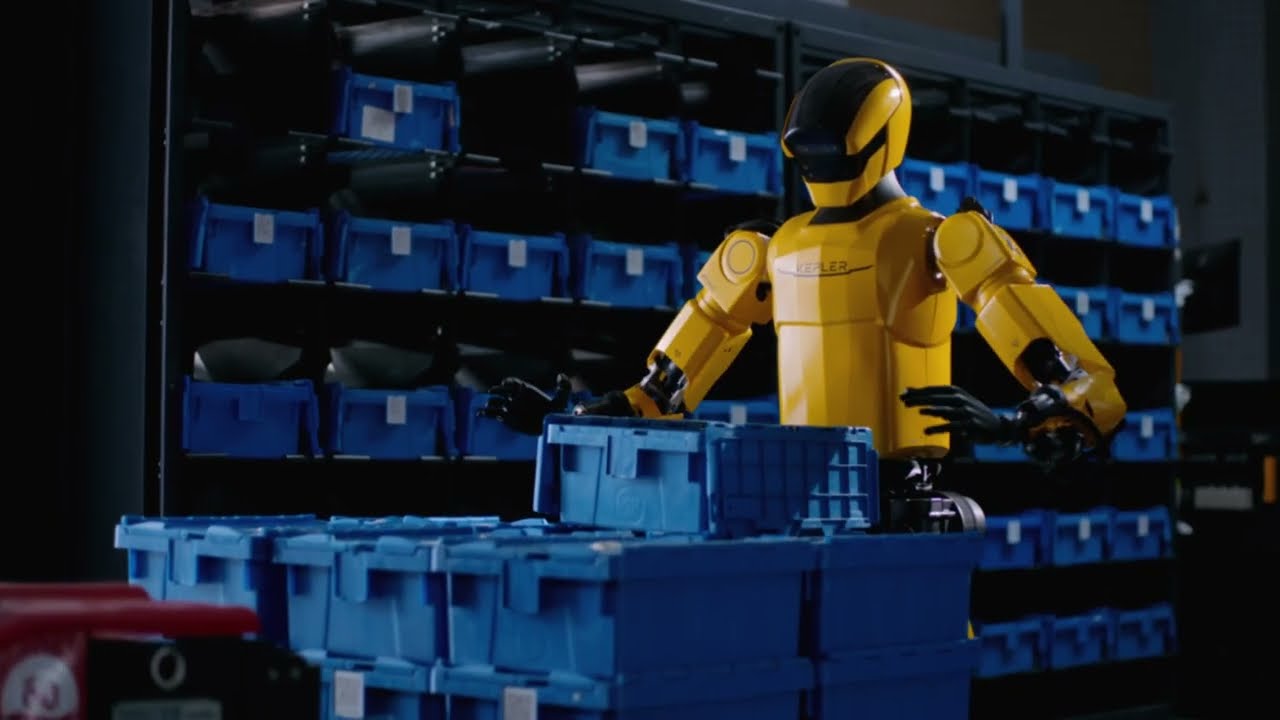
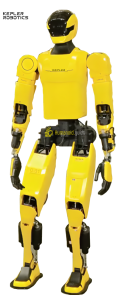
The Kepler K2 Bumblebee is a general-purpose humanoid robot developed by Shanghai-based startup Kepler Robotics. A variant of the K2 platform, it features a distinctive yellow-and-black finish and additional sensors compared to the base K2. With 28 degrees of freedom and seven-fingered dexterous hands, the Bumblebee is designed for material handling, assembly, and inspection tasks in factories and warehouses. It stands 175 cm tall and weighs 75 kg, carrying up to 30 kg in a standing posture. Powered by an NVIDIA Jetson AGX Orin running Ubuntu and ROS, it achieves top walking speeds of 3 km/h. Officially priced at $30,000 for a base model (confirmed at ICRA 2025), the K2 Bumblebee targets cost-conscious automation teams alongside pricier alternatives like the Unitree H1.
Specifications
Here are the full technical specifications.
| Spec | Value |
|---|---|
| Height | 175 cm |
| Weight | 75 kg |
| Degrees of freedom | 28 |
| Battery life | 2 hours |
| Max speed | 3 km/h |
| Payload | 30 kg (standing) |
| Price (new) | ~$30,000–$50,000 |
| Price (used range) | N/A (pre-order, no secondary market) |
Price & Value
New MSRP: ~$30,000–$50,000
Used range: N/A (pre-order, no secondary market)
Kepler Robotics confirmed a base price of approximately $30,000 for the K2 Bumblebee at ICRA 2025—a figure that undercuts many Western humanoids by tens of thousands of dollars. Options and sensor packages can raise the tag to $50,000, making it a mid-range alternative to mass-market projects like Tesla Optimus ($20,000 estimated) but far cheaper than the Unitree H1 ($90,000). While pre-order only in 2026, buyers receive Ubuntu/ROS compatibility and NVIDIA compute that reduce integration time. Resale value is uncertain until units ship, but the modular design and open-source software stack suggest decent long-term support. Total cost of ownership will depend heavily on deployment scale and the still-unconfirmed battery swap system.
Who Is It For?
Best for: - Manufacturers seeking low-cost, customisable humanoids for light assembly and inspection tasks (28 DOF allows wide manipulation range) - Research labs needing a ROS-based platform with tactile sensing and open-source APIs - Logistics companies exploring humanoid robotics at a sub-$50,000 entry point
Not for: - Heavy-payload operations (arm payload likely ~9 kg not specified for sustained lifts) - 24/7 continuous production (2-hour battery and lack of IP rating) - Outdoor or harsh environments (no weather sealing, unrated temperature range)
Alternatives & Comparison
The K2 Bumblebee occupies a competitive niche between ultra-low-cost aspirants and established high-performance humanoids. Its primary rivals combine the Tesla Optimus, Unitree H1, and Fourier GR-2.
| Model | Price | Available | Key Difference |
|---|---|---|---|
| Unitree H1 | $90,000 | preorder | Faster walking speed (5 km/h) and proven product line |
| Fourier GR-2 | Undisclosed | yes | Bio-inspired design, advanced dexterous hands |
| Tesla Optimus | $20,000 (estimated) | preorder | Mass production ambition, strong AI integration |
Verdict: For price-conscious adopters needing a capable, open-software humanoid today, the K2 Bumblebee delivers unmatched value at $30,000. The Tesla Optimus promises even lower cost but remains unshipped; the Unitree H1 offers higher speed and payload but at three times the price. Laboratories and SMEs will find the Bumblebee the most balanced option in 2026.
Use Cases & Capabilities
Material handling in logistics
The K2 Bumblebee's 28 degrees of freedom and two seven-fingered hands allow it to pick, pack, and transfer goods of various shapes. Its NVIDIA Jetson compute handles vision-based sorting at a modest 2-hour runtime, making it suitable for shift-based warehouse operations. Standing payload of 30 kg ensures it can move boxes and totes, though continuous heavy-lift cycles are constrained by battery life. Integration with ROS simplifies deployment alongside existing conveyor systems and WMS software.
Light assembly and kitting
Dexterous hands with tactile sensors enable the Bumblebee to perform fine insertion tasks and component alignment on assembly lines. The open-source Ubuntu+ROS stack allows quick custom programming for specific production cells. At 75 kg, the robot is easily relocated but may require safety cages due to the lack of an IP rating. Its 3 km/h walking speed lets it traverse between workstations, reducing the need for fixed conveyors.
Visual inspection and quality control
Equipped with RGB-D cameras, ultrasonic sensors, and an IMU, the Bumblebee can autonomously patrol production areas and capture high-resolution images of products. The embedded Jetson AGX Orin runs defect detection models at the edge with latency as low as 250 ms. Pre-order pricing makes it feasible to deploy multiple units for 24/7 coverage, though the 2-hour battery demands hot-swapping or frequent charging breaks. Integration with factory MES is achievable via ROS APIs.
Research and education
The K2 Bumblebee’s combination of an NVIDIA GPU, tactile sensing, and full ROS compatibility offers a powerful platform for humanoid robotics research. Universities can explore whole-body control, grasping, and human-robot interaction without the six-figure price tag of legacy research humanoids. The robot’s 28 DOF and 1080p camera suite provide ample data for perception algorithms. However, the lack of official safety certifications may require additional guarding in shared labs.
History & Background
Kepler Robotics, founded in 2023 in Shanghai, China, rose quickly with the introduction of the Kepler Forerunner (K1) humanoid later that year, featuring 40 degrees of freedom and an 8-hour battery. In August 2024, the company announced the K2 platform, expanding capabilities to 52 DOF and adding a variety of configurations. The K2 Bumblebee emerged soon after as a themed edition—dressed in yellow-and-black—with swapped sensors, a lower entry price, and a focus on factory tasks. Kepler confirmed the $30,000 base price at the ICRA 2025 conference, and by 2026 the Bumblebee was available for pre-order through resellers like MERA Robotics, with deliveries expected later in the year.
Buying Used — What to Check
Verify payload and battery health Payload and runtime are critical; used units may have degraded cells that limit the 2‑hour battery to less.
Check for sensor calibration drift Tactile sensors and cameras can drift over time; re-calibration may be costly if not done by the previous owner.
Confirm software licenses transfer ROS and NVIDIA stacks are open, but any proprietary Kepler modules or LLM API keys need clear transfer terms.